How Many Sprays of Perfume Should You Use? The Ultimate Dosage Guide
Finding the perfect perfume dosage can feel like a balancing act. Too few sprays, and your scent fades before lunch. Too many, and you risk overwhelming everyone in the room. So, how many sprays of perfume should you use? The answer depends on the fragrance, the occasion, and even your body chemistry. In this expert guide, we’ll break down the ideal number of sprays for every situation—whether you’re wearing a luxury scent, an affordable dupe, or a signature fragrance for daily wear.
Why Perfume Dosage Matters: The Science Behind the Spray
Perfume isn’t just about smelling good—it’s about making a lasting impression without overpowering. The right dosage ensures your fragrance evolves naturally on your skin, revealing its top, middle, and base notes at the perfect pace. Over-application can flatten these layers, making your scent smell one-dimensional or even unpleasant. Conversely, under-application means your fragrance may never reach its full potential.
Research shows that fragrance concentration plays a huge role in how many sprays you need. For example, Eau de Parfum (EDP) contains 15-20% aromatic compounds, while Eau de Toilette (EDT) has only 5-15%. This means an EDP will project more strongly with fewer sprays, while an EDT may require an extra spritz to achieve the same intensity. Understanding these nuances helps you tailor your dosage for the best results.
General Guidelines: How Many Sprays of Perfume Are Ideal?
While there’s no one-size-fits-all answer, these general rules can help you find your sweet spot:
1-2 Sprays: The Subtle Approach for Office and Everyday Wear
For professional settings or casual outings, 1-2 sprays are usually enough. Apply one spray to a pulse point (like your wrist or neck) and another to your clothing for a light, lingering scent. This dosage works well for office-friendly perfumes like Chanel Chance Eau Tendre or affordable alternatives like Zara Red Vanilla. The goal is to leave a subtle trail, not announce your presence before you enter the room.
3-4 Sprays: The Sweet Spot for Date Nights and Special Occasions
When you want to make an impression—whether it’s a romantic dinner or a night out—3-4 sprays strike the perfect balance. Focus on pulse points like your wrists, neck, and behind the ears, but avoid over-spraying in one area. For example, if you’re wearing a bold oriental fragrance like Yves Saint Laurent Black Opium, 3 sprays will give you depth without overwhelming. For lighter scents like Marc Jacobs Daisy, 4 sprays may be needed to achieve the same presence.
5+ Sprays: When More Is Too Much (And How to Avoid Overpowering)
More than 5 sprays is rarely necessary and can backfire, especially in close quarters. However, there are exceptions. If you’re outdoors in hot weather, a fifth spray on your clothing can help your fragrance last longer. Similarly, if you’re wearing a very light citrus scent, you might need an extra spritz to make it noticeable. That said, always step back and assess: if you can smell your perfume from arm’s length, it’s likely too strong.
Factors That Influence How Many Sprays You Should Use
Dosage isn’t just about the number of sprays—it’s about context. Here’s what to consider:
Fragrance Concentration: EDP vs. EDT vs. Parfum
As mentioned earlier, the concentration of your perfume dictates its strength. Here’s a quick breakdown:
- Parfum (Extrait de Parfum): 20-30% aromatic compounds. 1-2 sprays are often enough.
- Eau de Parfum (EDP): 15-20% aromatic compounds. 2-3 sprays are ideal for most occasions.
- Eau de Toilette (EDT): 5-15% aromatic compounds. 3-4 sprays may be needed for longevity.
- Eau de Cologne (EDC): 2-4% aromatic compounds. 4-5 sprays are often required.
For example, a single spray of Creed Aventus (EDP) can last all day, while a lighter EDT like Dior Sauvage may need 3-4 sprays to achieve similar longevity. Always check the concentration before deciding on dosage.
Season and Climate: Adjusting Dosage for Heat and Humidity
Heat and humidity amplify fragrance, so you’ll need fewer sprays in summer than in winter. In hot weather, fragrances evaporate faster, but they also project more strongly. A single spray of a fresh citrus scent like Jo Malone Wood Sage & Sea Salt can fill a room in summer, while the same scent may need 2-3 sprays in colder months. Conversely, rich oriental fragrances like Tom Ford Black Orchid can feel overpowering in summer but are perfect for winter with 2-3 sprays.
Skin Type and Body Chemistry: Why Your Scent Evolves Differently
Your skin’s natural oils and pH levels interact with perfume, altering its scent and longevity. Dry skin absorbs fragrance quickly, often requiring an extra spray or two. Oily skin, on the other hand, can make scents last longer but may also distort their notes. For example, a floral fragrance like Viktor & Rolf Flowerbomb might smell sweeter on oily skin, while a woody scent like Le Labo Santal 33 could become sharper. Always test your perfume on your skin before committing to a dosage.
Occasion and Setting: Matching Dosage to the Moment
The right dosage depends on where you’re going. Here’s a quick guide:
- Office: 1-2 sprays (e.g., Dior Homme Intense or Estée Lauder Beautiful).
- Date Night: 3-4 sprays (e.g., YSL Libre or Creed Aventus).
- Weddings or Formal Events: 2-3 sprays (e.g., Chanel No. 5 or Guerlain Shalimar).
- Outdoor Activities: 2-3 sprays (e.g., Jo Malone English Pear & Freesia or Abercrombie First Instinct).
- Gym or Casual Outings: 1 spray (e.g., Clean Reserve Skin or Glossier You).
Where to Apply Perfume for Maximum Impact (And Why It Affects Dosage)
Where you spray your perfume can make as much difference as how many sprays you use. Here’s how to maximize your fragrance’s potential:
Pulse Points: The Best Spots for Long-Lasting Fragrance
Pulse points are areas where your blood vessels are closest to the skin, generating heat that helps diffuse your fragrance. The most effective pulse points include:
- Wrists
- Neck (behind the ears and at the base of the throat)
- Inside elbows
- Behind the knees
- Chest (for a subtle, all-day scent)
Spraying on pulse points means you can use fewer sprays while still achieving strong projection. For example, 2 sprays on your wrists and neck can be as effective as 4 sprays on your clothing.
Clothing vs. Skin: Pros and Cons of Each Application Method
Spraying perfume on your skin allows it to interact with your body chemistry, creating a unique scent. However, it may fade faster, especially if you have dry skin. Spraying on clothing, on the other hand, can make your fragrance last longer but may not evolve as beautifully. Here’s when to use each method:
- Skin: Best for fragrances you want to blend with your natural scent (e.g., niche perfumes like Byredo Gypsy Water).
- Clothing: Ideal for strong, long-lasting scents (e.g., Tom Ford Oud Wood or Maison Margiela Jazz Club).
If you choose to spray on clothing, avoid delicate fabrics like silk, which can stain. Instead, opt for cotton or wool, which hold fragrance well.
Hair and Accessories: Creative Ways to Extend Your Scent
Your hair and accessories can carry your fragrance subtly throughout the day. Lightly spritzing your hairbrush or scarf with perfume can create a soft, lingering scent trail. However, be cautious with hair sprays—alcohol in perfume can dry out your strands. For a safer alternative, spray a light mist in the air and walk through it, or dab a tiny amount on your hairbrush.
Common Mistakes That Make Your Perfume Overpowering (Or Disappear Too Fast)
Even with the right dosage, small mistakes can ruin your fragrance experience. Here’s what to avoid:
Rubbing Your Wrists Together: Why This Kills Your Fragrance
Rubbing your wrists together after spraying perfume is a common habit, but it’s one of the worst things you can do. The friction crushes the fragrance molecules, altering their structure and causing your scent to fade faster. Instead, let your wrists air-dry naturally or gently pat them together if necessary.
Spraying from Too Far Away: How Distance Affects Dosage
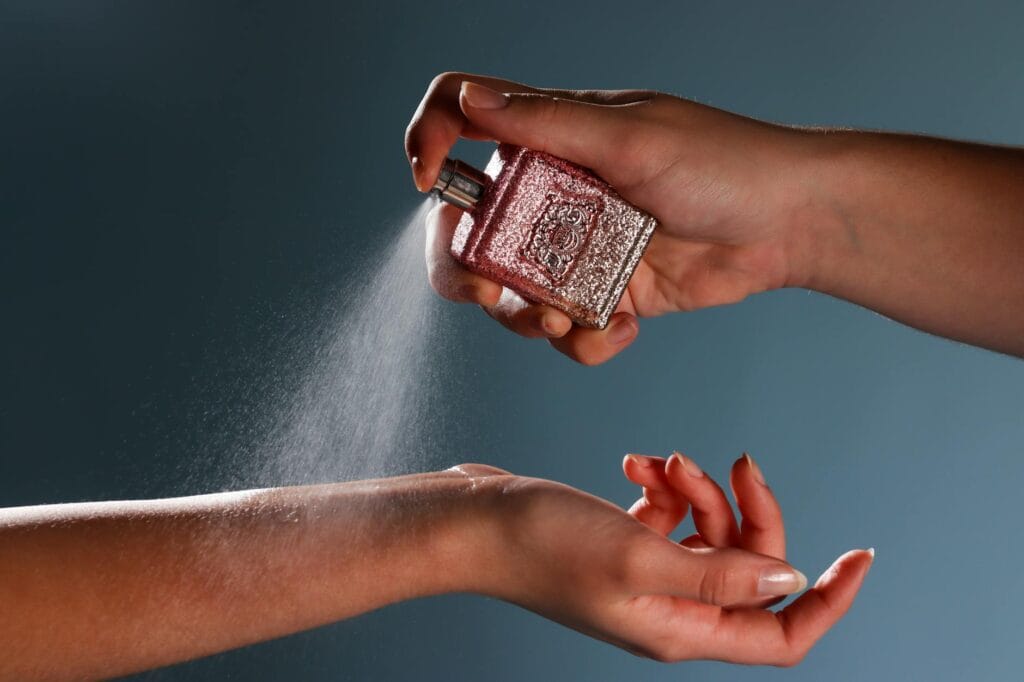
Spraying perfume from too far away (e.g., 12 inches or more) can cause the mist to disperse before it reaches your skin, leading to uneven application and wasted product. For the best results, hold the bottle 3-6 inches away from your skin and spray in short, controlled bursts. This ensures the fragrance lands where you want it and reduces overspray.
Ignoring the Fragrance Pyramid: How Notes Influence Dosage
Every perfume has a fragrance pyramid consisting of top, middle, and base notes. Top notes are the first impression and evaporate quickly, while base notes linger for hours. If you’re wearing a fragrance with strong top notes (e.g., citrus or herbal scents), you might need an extra spray to make it noticeable. Conversely, fragrances with heavy base notes (e.g., vanilla or musk) can become overpowering if over-applied. Always consider the fragrance pyramid when deciding on dosage.
How to Test Your Perfume Dosage Like a Pro
Finding your ideal dosage takes experimentation. Here’s how to test it effectively:
The 30-Minute Rule: Why You Should Wait Before Judging
Perfume evolves over time, so don’t judge your dosage immediately after application. Wait at least 30 minutes for the top notes to settle and the middle notes to emerge. This will give you a better sense of how the fragrance interacts with your skin and how many sprays are truly needed. For example, a fragrance that smells light at first may become richer after 30 minutes, requiring fewer sprays than you initially thought.
Asking for Feedback: How Others Perceive Your Scent
Sometimes, we’re too close to our own scent to judge it accurately. Ask a trusted friend or colleague for feedback. Do they notice your perfume when you enter the room? Does it feel too strong or too faint? Their perspective can help you adjust your dosage for the best balance.
Using Test Strips vs. Skin: Which Gives More Accurate Results?
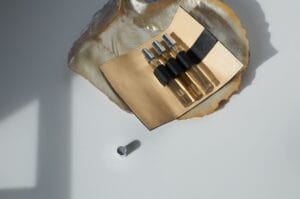
Test strips are great for getting a general idea of a fragrance, but they don’t account for how it interacts with your skin. Always test perfume on your skin before deciding on dosage. Apply a small amount to your wrist and wait 30 minutes to see how it develops. If you’re testing multiple fragrances, use different wrists or wait a few hours between applications to avoid scent confusion.
Perfume Dosage for Different Fragrance Families
Not all fragrances are created equal. Here’s how to adjust your dosage based on the fragrance family:
Floral and Fresh Scents: Light and Airy Application
Floral and fresh fragrances (e.g., Marc Jacobs Daisy or Jo Malone Wood Sage & Sea Salt) are designed to be light and uplifting. For these scents, 1-3 sprays are usually enough. Over-application can make them smell artificial or cloying. Focus on pulse points and let the fragrance breathe naturally.
Oriental and Woody Scents: Richer Dosage for Depth
Oriental and woody fragrances (e.g., Tom Ford Black Orchid or Le Labo Santal 33) are rich and complex, often requiring fewer sprays to make an impact. 2-3 sprays are ideal for these scents, as they have strong base notes that linger for hours. Applying too much can make them feel heavy or overwhelming.
Citrus and Aquatic Scents: Subtle Sprays for a Refreshing Touch
Citrus and aquatic fragrances (e.g., Acqua di Giò or Hermès Eau de Citron Noir) are bright and refreshing but fade quickly. To make them last, apply 3-4 sprays and focus on pulse points. You can also layer them with a matching body lotion to extend their longevity.
Luxury vs. Affordable Perfumes: Does Dosage Change?
Whether you’re wearing a luxury fragrance or an affordable dupe, the principles of dosage remain the same. However, there are a few key differences to keep in mind:
High-End Fragrances: Why Less Is Often More
Luxury perfumes are crafted with high-quality ingredients and higher concentrations of aromatic compounds. This means they often require fewer sprays to achieve the desired effect. For example, a single spray of Creed Aventus can last all day, while a similar dosage of a budget-friendly alternative might fade within hours. When wearing high-end fragrances, start with 1-2 sprays and adjust as needed.
Affordable Dupes: Adjusting Dosage for Similar Results
Affordable dupes are designed to mimic the scent of luxury fragrances, but they often have lower concentrations of aromatic compounds. This means you may need to apply more sprays to achieve a similar effect. For example, if you’re wearing a dupe of Yves Saint Laurent Black Opium, you might need 3-4 sprays instead of the 2-3 sprays you’d use for the original. Always test dupes on your skin to see how they perform before committing to a dosage.
Final Verdict: How Many Sprays of Perfume Should You Really Use?
So, how many sprays of perfume should you use? The answer depends on a variety of factors, including the fragrance concentration, the occasion, and your personal preferences. Here’s a quick recap:
- 1-2 sprays: Ideal for office, everyday wear, and subtle scents.
- 3-4 sprays: Perfect for date nights, special occasions, and lighter fragrances.
- 5+ sprays: Rarely necessary, but useful for outdoor activities or very light scents.
Remember, the goal is to find a dosage that enhances your presence without overpowering. Start with fewer sprays and adjust based on the fragrance’s performance. And don’t forget to consider the season, your skin type, and the setting—all of which can influence how your perfume behaves.
Ultimately, the best dosage is the one that makes you feel confident and comfortable. Experiment, ask for feedback, and trust your instincts. With these expert tips, you’ll master the art of perfume application in no time.
Questions fréquentes
Is it better to spray perfume on skin or clothes?
Spraying perfume on your skin allows it to interact with your body chemistry, creating a unique scent that evolves naturally. However, it may fade faster, especially if you have dry skin. Spraying on clothing can make your fragrance last longer but may not develop as beautifully. For the best results, apply 1-2 sprays to pulse points on your skin and 1 spray to your clothing.
How do I know if I’m using too much perfume?
If you can smell your perfume from arm’s length or if others comment that it’s too strong, you’re likely using too much. A good rule of thumb is to start with 1-2 sprays and adjust based on the fragrance’s concentration and the occasion. If you’re unsure, ask a trusted friend for feedback.
Does perfume last longer on skin or clothes?
Perfume generally lasts longer on clothing because the fabric holds the fragrance molecules, preventing them from evaporating quickly. However, spraying on skin allows the fragrance to blend with your natural scent, creating a more personalized aroma. For maximum longevity, apply perfume to both skin and clothing.
Can I mix different perfumes to create a unique scent?
Yes, you can layer perfumes to create a unique scent, but it’s important to choose fragrances with complementary notes. For example, pairing a fresh citrus scent with a woody fragrance can create a balanced, sophisticated aroma. Start with 1 spray of each fragrance and adjust based on how they blend. Avoid mixing more than 2-3 scents to prevent a muddled result.
Why does my perfume smell different on me than on the test strip?
Perfume interacts with your skin’s natural oils and pH levels, which can alter its scent. Test strips don’t account for this interaction, so your perfume may smell different on your skin. Always test fragrances on your skin and wait 30 minutes to see how they develop before deciding on a dosage.