Have you ever caught a whiff of a fragrance that stopped you in your tracks, demanding your full attention? Some scents do more than just make us smell good; they bypass our rational minds and trigger an immediate, almost primal craving. These are the olfactory masterpieces that fragrance enthusiasts and casual wearers alike describe as “addictive.” They are the bottles we reach for repeatedly, the scents that linger in our memories long after the wearer has left the room.
But what is it about certain liquid compositions that makes them so utterly irresistible? In this comprehensive guide, we dive deep into the psychology, chemistry, and artistry behind the Most Addictive Perfumes Ever Created. Whether you are searching for a captivating new signature scent or trying to understand the science of scent obsession, these legendary fragrances represent the pinnacle of olfactory allure.
The Psychology of Scent Addiction: Why We Get Obsessed
Our sense of smell is the only one of our five senses with a direct, unfiltered pathway to the brain’s limbic system—the ancient emotional powerhouse that governs memory, mood, and instinct. When you inhale a perfume, the volatile scent molecules bind to receptors in your nasal cavity, sending instant electrical signals to the amygdala and hippocampus.
According to research from the Fifth Sense Organization, this direct neurological connection explains why odors can trigger vivid emotional memories and physical cravings far more intensely than sights or sounds. An addictive perfume leverages this biology by combining notes that evoke comfort, warmth, excitement, or sensuality. It creates a feedback loop in our brains, releasing a micro-dose of dopamine every time we catch a trace of the scent on our skin or clothes.
What Makes a Fragrance Truly Addictive? The Key Olfactory Triggers
While personal preference plays a role, certain raw materials and accord structures possess universal appeal. Perfumers rely on specific “addictive” profiles to capture our senses:
- The Gourmand Rush: Sweet notes like vanilla, caramel, praline, and chocolate mimic the psychological pleasure of eating high-calorie treats. This triggers our brain’s reward centers.
- The Skin-Like Musks: High-quality musks mimic the natural warmth of clean human skin, creating a subconscious sense of intimacy, safety, and physical attraction.
- The Contrast of Hot and Cold: Master perfumers often pair cool, fresh top notes (like bergamot or pink pepper) with warm, resinous bases (like amber and benzoin). This olfactory tension keeps the brain intrigued.
- The Power of Ambergris: Whether natural or synthetic (like Ambroxan), ambergris adds a salty, velvety, and radiating warmth that makes a perfume feel alive and dynamic.
Understanding these triggers is essential when exploring the different fragrance families to find a blend that resonates with your personal chemistry.
The Hall of Fame: The Most Addictive Perfumes Ever Created
Here is our curated selection of the most captivating, head-turning, and addictive fragrances in modern perfume history. These scents have achieved legendary status for their unique ability to obsess those who wear them—and those who smell them.
1. Maison Francis Kurkdjian Baccarat Rouge 540
No discussion of addictive fragrances is complete without mentioning Baccarat Rouge 540. Launched in 2015, this creation by master perfumer Francis Kurkdjian completely redefined modern luxury perfumery. It is a masterclass in molecular minimalism, built around a unique combination of airy jasmine, saffron, warm amberwood, and a heavy dose of ethyl maltol (the molecule responsible for the smell of burnt sugar or cotton candy).
What makes Baccarat Rouge 540 so incredibly addictive is its elusive, shimmering nature. Thanks to its heavy use of Ambroxan, it exhibits an “on-and-off” projection style. You smell it, it disappears, and then it suddenly wafts back into your awareness hours later. This olfactory peek-a-boo game keeps the wearer constantly chasing the scent, making it one of the most complimented perfumes ever.
2. Yves Saint Laurent Black Opium
If you crave a dark, energizing, and unapologetically sweet fragrance, YSL’s Black Opium is the ultimate modern classic. Released in 2014, it took the fragrance world by storm by introducing an innovative, high-contrast accord of rich black coffee and sweet, creamy vanilla.
The addictive quality of Black Opium lies in its juxtaposition of bitter and sweet. The sharp, waking jolt of the coffee note is softened by white florals (jasmine and orange blossom) and wrapped in a warm, comforting blanket of patchouli and cedarwood. It is a nocturnal, seductive fragrance that acts like a warm, sweet espresso shot for the soul.
3. Frédéric Malle Portrait of a Lady
For those who prefer their obsessions dark, dramatic, and sophisticated, Frédéric Malle’s Portrait of a Lady is unmatched. Created by Dominique Ropion, this is not your typical pretty rose perfume. It is a symphonic, gothic masterpiece featuring an unprecedented dosage of Turkish rose (equivalent to 400 roses per 100ml bottle) resting on a massive bed of patchouli, frankincense, sandalwood, and red fruits.
The addiction here comes from its sheer opulence and mystery. The smoky incense and earthy patchouli cut through the sweetness of the rose, creating a complex, unisex aura that projects absolute confidence and quiet authority. It is a staple among the best luxury niche perfumes for discerning collectors.
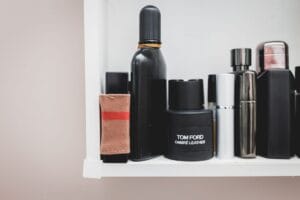
4. Tom Ford Lost Cherry
Tom Ford is a master of provocative, boundary-pushing fragrances, and Lost Cherry is perhaps his most playful yet addictive creation. This scent captures the contrast between sweet and dark, innocent and indulgent.
Lost Cherry opens with a mouthwatering burst of black cherry, bitter almond, and boozy cherry liqueur. As it dries down, it reveals a warm, resinous heart of Turkish rose, jasmine sambac, roasted tonka bean, sandalwood, and vetiver. The hyper-realistic, sweet-yet-tart cherry note combined with the warm, almond-like tonka bean creates a rich, marzipan-like gourmand trail that is impossible to ignore.
5. Kilian Angels’ Share
Inspired by the heritage of the Hennessy cognac-making family, Kilian’s Angels’ Share is the liquid embodiment of cozy luxury. Named after the portion of cognac that evaporates during aging, this perfume smells like a warm, boozy apple pie enjoyed next to a crackling fireplace.
The composition features real cognac oil, oak absolute, cinnamon, tonka bean, and sandalwood. The sweetness is balanced beautifully by the dry, woody oak and the sharp warmth of the cinnamon. It is incredibly long-lasting and leaves a rich, warm sillage that makes people want to lean closer to you.
6. Parfums de Marly Delina
Delina by Parfums de Marly is a modern floral phenomenon. Created by Quentin Bisch, this fragrance took the traditional rose note and modernized it with a sharp, mouthwatering addition of rhubarb and lychee.
The opening is bright, tart, and incredibly vibrant, while the heart features a creamy, powdery Turkish rose wrapped in peony and lily of the valley. The base of cashmeran, musk, and incense adds a sensual, velvety depth. This contrast between the tart, juicy fruits and the creamy, luxurious florals creates a highly addictive, youthful, yet sophisticated energy that lasts for over twelve hours on the skin.
7. Guerlain Shalimar
To understand modern addictive scents, we must pay homage to the blueprint: Guerlain’s Shalimar. Created in 1925 by Jacques Guerlain, Shalimar is widely considered the first oriental-amber fragrance in history. Inspired by the love story behind the Taj Mahal, it remains an undisputed masterpiece of tension and contrast.
Shalimar opens with a massive, bright splash of bergamot, which quickly gives way to a dark, smoky, and leather-infused vanilla base. The secret to Shalimar’s century-long addiction is this contrast between sparkling citrus, animalic leather, and sweet, high-quality vanilla. It is a complex, seductive scent that evolves beautifully on the skin, proving that true addiction is timeless.
8. Escentric Molecules Molecule 01
On the opposite end of the spectrum from Shalimar lies Molecule 01, a fragrance that challenged the very definition of perfumery. Created by Geza Schoen, Molecule 01 consists of a single aroma-chemical: Iso E Super, diluted in perfumer’s alcohol.
Iso E Super is a synthetic molecule that smells like a soft, clean, cedarwood-like skin scent. On its own in the bottle, it is almost imperceptible. However, once it reacts with your body heat and natural skin chemistry, it radiates a warm, velvety, and magnetic aura. It is a fragrance that you might not smell on yourself, but everyone around you will notice and crave. It is the ultimate subtle, clean, and highly addictive skin scent.
Decoding the Notes: The Chemistry of Scent Obsession
To help you understand what drives your personal scent cravings, let’s look at the specific ingredients that make these legendary perfumes so captivating:
| Addictive Note | Scent Profile | Why It’s Addictive | Key Example |
|---|---|---|---|
| Vanilla / Ethyl Maltol | Sweet, sugary, warm, comforting | Triggers the brain’s reward system, mimicking sweet treats. | Baccarat Rouge 540, Black Opium |
| Amber / Ambergris | Warm, salty, mineral, skin-like | Adds a radiating warmth that mimics natural pheromones. | Shalimar, Angels’ Share |
| Iso E Super | Velvety, woody, clean skin | Creates an elusive, magnetic aura that reacts with skin chemistry. | Molecule 01 |
| Patchouli | Earthy, dark, woody, slightly sweet | Provides depth and grounding contrast to sweet or floral notes. | Portrait of a Lady |
Among these, amber notes in perfumery are particularly renowned for their ability to anchor a fragrance, providing a warm, resinous foundation that lingers on the skin for hours and leaves a memorable trail.
How to Choose Your Personal Addictive Signature Scent
Finding a fragrance that feels like an obsession is a highly personal journey. What triggers a dopamine rush for one person might feel overwhelming to another. Here is how to find your perfect match:
- Identify Your Comfort Notes: Do you naturally gravitate toward sweet treats (gourmand), clean laundry (musk), fresh forests (woody), or rich spices (amber)? Knowing your preferred fragrance family is the first step.
- Test on Your Skin, Not Paper: Perfume is a living art piece. It reacts with your unique skin temperature, pH level, and natural oils. A scent that smells sharp on paper might dry down to a beautiful, creamy masterpiece on your wrist.
- Give It Time to Evolve: Never buy a perfume based on the first spray. The top notes evaporate within 15 to 30 minutes. Let the fragrance develop through its heart and base notes over several hours to ensure you love the entire journey.
- Consider the Season and Occasion: Heavy, sweet gourmands and rich ambers shine beautifully in cold weather, while lighter, muskier skin scents are perfect for hot summer days or professional office environments.
Maximizing Your Fragrance: How to Make Addictive Scents Last All Day
Once you have found your signature obsession, you want to make sure it performs. To get the absolute most out of your perfume, apply it directly to your pulse points—your wrists, the sides of your neck, behind your ears, and even the back of your knees. These areas generate natural body heat, which helps diffuse the scent molecules into the air throughout the day.
Additionally, applying your perfume immediately after showering onto well-moisturized skin will lock in the scent. Dry skin absorbs the perfume oils, causing the fragrance to fade much faster. For an extra touch of allure, you can also lightly spray your hair or clothes, as fabric and hair fibers hold onto scent molecules incredibly well.
Questions fréquentes
Why do some perfumes smell addictive to me but not to others?
Scent perception is deeply tied to personal memories, genetics, and cultural background. A note that triggers nostalgia and comfort for you (like vanilla or cinnamon) might not have the same emotional association for someone else. Additionally, individual skin chemistry alters how a perfume smells on the skin.
What is the most addictive note in perfumery?
Vanilla and ethyl maltol (burnt sugar) are widely considered the most universally addictive notes because they trigger the brain's reward centers, mimicking the pleasure of eating sweet foods. Musks and ambergris are also highly addictive due to their warm, skin-like qualities.
Are synthetic perfume molecules safe to wear?
Yes, synthetic fragrance molecules like Iso E Super and Ambroxan are highly regulated by the International Fragrance Association (IFRA) and are thoroughly tested for safety. In many cases, they are less allergenic than natural essential oils.
How long should an addictive perfume last on the skin?
High-quality, addictive perfumes—especially those in the Eau de Parfum (EDP) or Extrait de Parfum concentration—typically last between 6 to 12+ hours on the skin, depending on the base notes used (like amber, vanilla, or patchouli).
Can a perfume's addictive quality change over time?
Yes, your sense of smell can evolve due to hormonal changes, aging, or scent fatigue (becoming temporarily nose-blind to a fragrance you wear daily). Rotating your fragrances can help keep your favorite scents feeling fresh and exciting.